
While Nifty 50 reflects changes in 40 years, it also shows what is missing: Low-cost manufacturers at one end, and deep-value players at the other. Also missing are technology players, observes T N Ninan.

PharmEasy has acquired Medlife for an undisclosed amount, the e-pharmacy unicorn said on Tuesday. The deal will make PharmEasy the largest player in the domestic online pharmacy sector, with the combined entity set to serve 2 million customers a month.

Unlike many other B-schools, IIM Ahmedabad follows a cluster system of final placements process where sectors are invited in cohorts at regular intervals.

Omkeshwar Singh, Head, Rank MF, a mutual fund investment platform, answers your queries.
Yes Bank was the top gainer in the Sensex pack rising 5.80 per cent, followed by Tata Motors, ICICI Bank, IndusInd Bank, Axis Bank, Kotak Bank and Tata Steel.

$47.6 bn capital invested across 921 deals in India in 2020, despite pandemic.

India's largest IT services firm Tata Consultancy Services (TCS) on Wednesday said its shareholders have approved its up to Rs 16,000 crore share buyback plan. Last month, TCS' board of directors had approved a proposal to buy back up to 5,33,33,333 equity shares of the company at Rs 3,000 per scrip for an aggregate amount not exceeding Rs 16,000 crore. "....the members of the company have duly passed the special resolution approving the Buyback," TCS said in a regulatory filing on Wednesday. The voting, which started on October 20 and ended on November 18, saw 99.57 per cent of the votes being cast in favour of the buyback offer.

Loans for Indian airlines have dried up as banks have become cautious to lend to the sector.

Ajit Mishra, vice president, Research, Religare Broking, answers your queries.

Encouraged by a steady recovery seen in the first two weeks of February, hospitality firms expect the business hotels in metros including Mumbai, Bengaluru, Chennai, Kolkata and Hyderabad that have been lagging the leisure hotels in terms of revenue per available room (RevPar) to catch up in the coming months. Huge pent-up demand for MICE (meetings, incentives, conference and exhibitions) as companies slowly return to hosting physical events coupled with easing of the recently announced restrictions on international travel, will also help in getting closer to pre-Covid levels of revenue, they said. The Omicron wave that peaked in January had derailed the strong month-on-month recovery seen by the hotels since August.

We have our own problems for sure and they are not trivial, but for now, our economy is in not too bad a shape, our politics is as personality-driven and authoritarian as that of most countries in the world. We must make the best of what we have and not be excessively unhappy looking at the grass on the other side of the septic tank which may not be greener after all!, observes Shreekant Sambrani.

The growth momentum that started during the festival season is likely to sustain in the new year, reports Arindam Majumder.

The share of public sector undertakings (PSUs) in the total market capitalisation of listed companies--at an all-time low of 10 per cent currently --- may get a leg-up from the government's divestment push. Recently the government announced the successful sale of national carrier Air India to Tata Sons, India's first privatisation of a PSU since 2002-03. The transaction is expected to be completed by December.
Hero MotoCorp was the top gainer in the Sensex pack, spurting 4.46 per cent. IndusInd Bank, Tata Motors, Vedanta, SBI, M&M, Sun Pharma, Tata Steel, HDFC and HDFC Bank too rose up to 3.63 per cent.

Ajit Mishra, vice president, Research, Religare Broking, answers your queries.

Since existing laws do not cover Covid-19, any compensation in this regard has to be left to the discretion of companies.

CII said working capital limit enhancement should be accompanied by relaxing norms related to collaterals.
The approval comes few days before the company has to clear statutory liabilities of up to nearly Rs 35,586 crore, of which Rs 21,682 crore is licence fee and another Rs 13,904.01 crore is spectrum dues.

Experts said the 20 per cent drop in the market poses a challenge for companies that have set the ball rolling on their IPO plans as valuations will now have to realign. This could entail more dilution or lowering of the issue size.
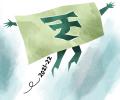
Listed companies' net profit as a percentage of gross domestic product (GDP) has hit a decadal high and is expected to edge even higher over the next two financial years. According to an analysis by ICICI Securities, India's Inc net profit stood at Rs 8.4 trillion, or 4 per cent of GDP of Rs 210 trillion for the trailing 12-month period ending September. This is the highest since financial year 2011-12 (FY12), when it was at 4.6 per cent.

Top losers in the Sensex pack included IndusInd Bank, Yes Bank, SBI, L&T, Tata Steel, M&M, Bajaj Finance, Vedanta, Tata Motors and RIL, tumbling up to 6.97 per cent.

IT major Tata Consultancy Services (TCS) has made changes to its leadership roles in North America. As part of the changes Suresh Muthuswami has been elevated to the role of chairman, North America, said sources in the know. This is one of the most significant leadership changes the company has announced for the region. The reason for the changes in the North American region, the largest in terms of revenue for TCS, is because Surya Kant who has been at the helm of North America for the past 16 years is stepping down by the end of the fiscal year, as he retires.

So which sectors are likely to do well in 2022? Should you focus on domestic economy-related sectors or export-oriented ones?

Finance Minister Nirmala Sitharaman on Tuesday unveiled a Rs 39.45 lakh crore Budget with a view to fire up the key engines of the economy to sustain a world-beating recovery from the pandemic. This was Sitharaman's fourth Budget. While the taxpayers were left in the lurch, once again, was she able to cheer Corporate India?

With the dizzying rise in the number of Covid-19 cases in the country, India Inc has transitioned from a wait-and-watch policy to full-on emergency mode, bringing back remote and flexi work, stringent safety protocols, and allowing only essential travel. Companies - especially in metros like Delhi, Mumbai and Kolkata - that had adopted a hybrid work model during the last few months when the caseload remained low, are either switching back entirely to work-from-home (WFH), or calling skeletal staff to office on select days. Take the case of cigarettes-to-hotels major, ITC, which had been on a hybrid work model over the last few months.
 © 2026 Rediff.com - Advertise with us - Disclaimer - Privacy Policy - Sitemap - Feedback - About us - Terms of use - Grievances